So, why should you consider buying factory-direct, medical-grade absorbent paper? Well, it can really boost your supply chain’s transparency, keep the material consistent, and make purchasing a lot smoother. Hospitals, labs, and medical equipment makers all need paper that absorbs quickly, without shedding fibers—stuff you can rely on. When you source directly from a good factory, they often have production records, batch info, and solid tech support to back you up. These little details matter a lot—especially when that paper touches trays, instruments, or delicate work areas.
Dr. Elena Morris, who specializes in medical packaging, put it perfectly—she says, “Material consistency is key because every wet spot can reveal a process weakness.” And she’s right. Open communication helps avoid misunderstandings about things like weight, absorbency, sheet size, or packaging. Plus, it’s a smart move to ask for samples before you place a big order. Factories can even tweak roll widths or sheet dimensions to better fit your workflows. That kind of flexibility can save you time and reduce waste, making handling much easier.
Now, let’s be clear—getting a lower price doesn’t automatically mean the quality is better. Just because it’s cheaper doesn’t mean it performs well. Buyers should still check the specs, review quality records, look at packaging, and make sure everything meets medical standards. When you’re looking at Absorbent Pads Medical suppliers, ask how their paper actually performs in real-world conditions. Like, how fast does it soak up fluid? Does the surface stay stable when saturated? A few small tests can reveal big differences.
Something often overlooked is how quickly the manufacturer responds. An answer that’s quick and helpful can solve packaging issues before they turn into production delays. Buying directly from a factory works best when you have solid proof behind every claim. Careful sampling, documented checks, and honest feedback make your decision more trustworthy. Ultimately, it’s not just about getting cheaper paper—it’s about dependable performance, clearer accountability, and fewer surprises down the line.
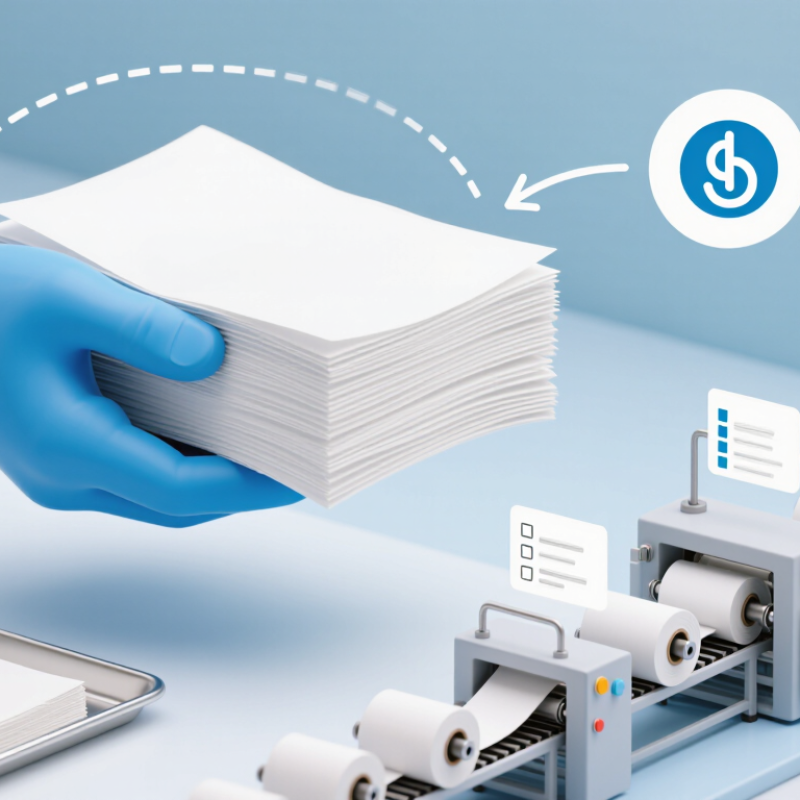
Medical grade absorbent paper is engineered for controlled healthcare and laboratory environments. It absorbs fluids through capillary action, helping protect surfaces and manage small spills. Unlike ordinary tissue, it requires consistent structure, cleanliness, and predictable performance. Its exact requirements depend on the intended application, such as instrument wrapping, sample handling, or surface protection.
Core properties include fast absorption, sufficient wet strength, low lint, and stable thickness. Clean manufacturing also matters. Loose fibers or unwanted particles may interfere with sensitive procedures.
Factory-direct sourcing can improve batch traceability and communication about pulp sources, testing, packaging, and storage conditions. Still, “medical grade” should not be treated as a universal guarantee. Buyers should review specifications, test reports, and intended-use evidence. No material is perfect. I have seen performance change when paper is stored in humid conditions or compressed too tightly.
Tips: Check absorption speed, wet strength, basis weight, and lint levels before purchasing. Ask for representative samples, not only a specification sheet. Test the paper with the fluids and equipment used in your facility. Confirm packaging integrity and lot identification. A small trial may reveal handling problems that laboratory data misses.
Why Buy Factory Direct Medical Grade Absorbent Paper?
How Factory-Direct Sourcing Works in Medical Paper Production
Factory-direct sourcing connects buyers with the people who make the paper. This removes some unnecessary trading layers. It also creates more responsibility for technical communication.
Production usually begins with a written specification. Basis weight, absorbency, wet strength, cleanliness, and sheet size must be defined clearly. The factory then selects suitable cellulose fibers and process conditions. Operators monitor forming, drying, cutting, and packaging at each stage.
Quality teams may test absorption speed, liquid capacity, lint, moisture, and microbial control. Batch records link finished rolls to raw materials and production dates. This traceability helps buyers investigate problems quickly. It is more reliable than judging paper by appearance alone.
Factory visits can reveal practical details. Look for covered storage, clean cutting areas, calibrated instruments, and controlled packing stations. Ask for samples from different production batches. One sample can look excellent. It may not represent regular performance.
Do not confuse medical absorbent paper with Absorbent Kitchen Paper. They may feel similar, but their specifications and intended uses differ. Medical production requires tighter documentation and consistent controls. Factory-direct purchasing can support customization, but it does not guarantee quality automatically. A low price may hide weak testing or unstable materials. Even experienced buyers can overlook humidity changes during shipping. That deserves a second review.
Buying Absorbent Paper factory direct can shorten communication, but price alone proves nothing. In medical packaging, quality begins with controlled pulp, clean water, and documented converting conditions. Operators should verify basis weight, thickness, absorbency time, wet strength, particle release, and bioburden. A certificate is only a starting point. The World Health Organization reports that one in ten patients experiences harm in healthcare, with over half considered preventable in its 2023 patient safety factsheet. That figure makes small material failures worth examining.
A credible supplier should work within ISO 13485 controls and define acceptance limits before production. Incoming fibers need lot identification. In-process checks should record moisture, caliper, edge dust, and roll tension. Finished sheets require sampling plans, retained samples, and calibrated instruments. For sterile barrier applications, ISO 11607-1 and EN 868-5 provide relevant packaging requirements. However, neither standard automatically validates every absorbent grade. This distinction is often missed.
Factory-direct purchasing can improve traceability when the factory shares batch records, change notifications, and corrective-action evidence. Ask for test methods, not attractive numbers. ASTM F88 seal-strength data may assess a package seal, not the paper itself. That matters. A useful audit follows one carton from raw material receipt to packed shipment. Check the label, moisture barrier, surface fibers, and damaged corners. No process is perfect. Even experienced teams can overlook seasonal humidity or a worn cutting blade. Regular requalification, complaint trending, and honest deviation reviews keep Absorbent Paper dependable at the point of use.
Buying medical grade absorbent paper directly from a manufacturer can reduce several hidden costs. Fewer intermediaries often mean lower markups, clearer quotations, and more predictable purchasing budgets. This matters when clinics, laboratories, or medical packaging teams reorder regularly.
Direct communication also improves technical accuracy. Buyers can discuss absorbency, basis weight, sheet dimensions, moisture resistance, and packaging requirements with production specialists. Small details matter. A wrong specification may create waste during converting or packaging. Factory teams can usually provide batch records, inspection data, and material specifications for proper internal review.
Shipping costs may also improve when orders are consolidated. Manufacturers can plan pallet sizes, production schedules, and repeat deliveries more efficiently. Long-term supply arrangements may reduce urgent orders and avoid expensive last-minute freight. However, direct purchasing is not always the cheapest option. Minimum order quantities, storage space, and import handling can increase the real cost. Careful buyers should compare the full landed price, not only the unit quotation.
A reliable supplier should explain quality controls clearly and respond consistently when questions arise. Requesting samples and testing absorbency under actual working conditions can prevent costly assumptions. Specifications look convincing on paper. Performance still needs verification. Direct contact gives buyers a practical way to review defects, improve packaging, and adjust future orders with the people closest to production.
Why buy factory direct medical grade absorbent paper? Customization is the stronger answer when procedures have different fluid-control demands.
The 2023 WHO Global Patient Safety Report estimates that one in ten patients is harmed during healthcare. That figure makes material consistency more than a purchasing preference. Direct production supports controlled basis weight, sheet size, absorbency, wet strength, folding, and packaging. It also enables traceable lots and faster corrective action.
Customization can reduce waste. Grand View Research estimated the global medical packaging market at about USD 49 billion in 2023, with continued growth driven by sterile, efficient packaging needs. Manufacturers can develop smaller sheets for instrument trays or wider rolls for clinical processing. Sashimi Absorbent Paper may describe highly absorbent food sheets, but medical applications require separate material validation. The names sound similar. The standards are not.
A practical specification might request a 20-by-30-centimeter sheet, low-lint fibers, and controlled fluid uptake within a defined time. Samples should undergo absorbency, tensile, microbial, and packaging checks. ISO 11607 principles also require packaging systems to protect sterility through handling and distribution. Not every custom request is wise. Higher absorbency can weaken wet strength, while heavier paper may increase disposal volume. Factory trials, documented test results, and operator feedback should shape the final design.
Buying medical grade absorbent paper directly from a factory changes how supply decisions are managed. The benefit is not only a lower quoted price. It is clearer visibility. Production teams can confirm pulp availability, coating schedules, and packing capacity before an order is released. In practice, this matters when a clinic or converter needs stable weekly deliveries. A distributor may add another communication layer. That layer can hide small delays.
Lead time should be measured from approved specifications, not from the purchase order alone. Sample approval, material testing, roll slitting, and final inspection all consume real days. A reliable supplier records each stage and shares realistic dates. For example, a shipment planned for Friday should show whether inspection is complete by Wednesday. This allows changes before shelves become empty. Factory-direct communication also helps adjust roll width, sheet size, or packaging without repeated explanations. However, direct buying is not automatically reliable. Capacity can tighten during seasonal demand, and forecasts can be wrong.
A stronger process uses written specifications, batch records, retained samples, and clear escalation contacts. Quality staff should verify absorbency, cleanliness, strength, and packaging condition against defined requirements. These checks support medical applications without replacing the buyer’s own validation. The same supply discipline can guide products such as Fresh Produce Absorbent Paper, where moisture control and delivery timing affect performance. I would still keep a small safety stock. It costs space. But one overlooked delay can cost more. No system is perfect; transport or raw material changes may still affect a well-planned order.
Factory-direct sourcing can improve supply-chain visibility and order consistency by reducing distribution layers. The chart shows typical procurement-planning benchmarks for medical converting materials; actual performance varies by specification, order volume, qualification status, and region.
Shorter and more predictable replenishment cycles help manufacturers maintain safety stock, reduce urgent purchasing, and plan production with greater confidence.
Buying absorbent paper directly from a factory can improve communication, customization, and cost control. However, the supplier deserves careful evaluation before any order. A reliable medical paper factory should explain its fiber source, basis weight, absorbency, wet strength, and packaging conditions. Ask for current test reports, batch records, and clear product specifications. Vague answers are warning signs.
Factory capability matters beyond machinery. Check whether production areas are clean, controlled, and suitable for medical packaging materials. Request information about quality management systems, incoming-material inspections, and lot traceability. A dependable supplier should provide samples from regular production, not specially prepared pieces. Compare absorption time, liquid spread, tearing resistance, and surface lint under practical conditions. Also confirm whether the paper suits your sterilization method and storage environment. A perfect sample proves little.
Tips: Visit the facility when possible. Review calibration records and complaint procedures. Ask how nonconforming batches are isolated. Confirm lead times in writing, including inspection and export documents. Do not judge quality by price alone. I have seen purchasing decisions focus too heavily on unit cost, while inconsistent moisture resistance created greater downstream waste. That risk is easy to underestimate. A thoughtful supplier evaluation may take longer, but it supports safer, more stable production.
Direct production improves communication, customization, cost control, and lot traceability. It also supports faster corrective action when problems appear.
Buyers can request specific sheet sizes, basis weights, absorbency levels, wet strength, folding styles, and packaging formats. A 20-by-30-centimeter sheet is one practical example.
Smaller sheets may suit instrument trays, while wider rolls may support clinical processing. Correct sizing reduces unused edges and unnecessary disposal volume.
Samples should undergo absorbency, tensile, microbial, and packaging checks. Test liquid spread and tearing resistance, too. Real use matters.
Wet strength helps paper resist tearing after fluid contact. However, higher absorbency can sometimes weaken the sheet. The balance needs testing.
Request current test reports, batch records, specifications, and regular-production samples. Inspect fiber sources, basis weight, moisture resistance, and surface lint.
Review clean production areas, incoming-material inspections, calibration records, and lot traceability. Ask how nonconforming batches are isolated.
No. A perfect sample proves little. Compare multiple production lots under practical conditions before approving an order.
Confirm that the paper suits the intended sterilization method and storage environment. Packaging should protect required conditions during handling and distribution.
Not always. Low-priced paper may create tearing, inconsistent moisture resistance, or extra waste. Total operating cost deserves closer attention.
Factory Direct Medical-Grade Absorbent Paper is designed to provide reliable fluid absorption, consistent thickness, clean handling, and suitable strength for medical, laboratory, and protective applications. Buying directly from a manufacturer allows purchasers to understand how the paper is produced, from fiber selection and forming to drying, converting, and packaging. A qualified factory should maintain documented quality controls, perform absorbency and strength testing, manage cleanliness requirements, and provide clear product specifications for every order.
Direct sourcing can reduce intermediary costs, improve communication, and support more competitive pricing without compromising product consistency. Manufacturers may also offer customization in sheet size, roll format, basis weight, absorbency level, packaging, and labeling according to practical application needs. Buyers should evaluate production capacity, quality certifications, sample procedures, lead-time reliability, inventory planning, and after-sales communication before placing an order. A dependable supplier can help stabilize the supply chain, respond efficiently to repeat demand, and provide predictable delivery for long-term procurement planning.