Picking out an OEM Beauty Facial Towel supplier isn’t just about comparing prices. Honestly, it’s more about the quality of the product. After all, a facial towel touches sensitive skin, absorbs water, shows off your branding, and often represents your salon or skincare brand. If there are small flaws—like loose fibers, rough edges, weird chemical smells, or uneven embroidery—they can really turn customers off pretty quickly.
A textile expert, Dr. Seshadri Ramkumar, once reminded us: “Performance needs to be judged based on how it actually performs in real use, not just how it looks or feels in a showroom.” That’s so true when comparing suppliers worldwide. Sure, a sample might feel super soft at first, but what happens after you wash it a few times? Will it shrink? Will it start shedding lint during facial treatments? Those are important things to consider.
In this guide, I’ve rounded up seven major OEM suppliers for Beauty Facial Towels across the globe. We’re looking at stuff like cotton quality, bamboo blends, GSM options, absorbency, color consistency, private labeling options, packaging, minimum order quantities, and how smoothly they communicate during production. We also pay close attention to practical stuff—like testing samples and seeing how they hold up through wash cycles.
A solid supplier should be upfront about what materials they use and give realistic timelines. Certifications and factory audits are great, but honestly, nothing beats doing your own product testing to be 100% sure.
Details really do matter here. The top supplier might not be the cheapest, but that doesn’t mean you need to splurge on the most expensive one either. Sometimes, a low MOQ can hide higher per-unit costs, and eye-catching packaging could be distracting you from weak towel construction. So, you gotta look beneath the surface.
We’ve evaluated these suppliers based on their commercial viability, manufacturing capacity, and consistent performance of their beauty facial towels. That said, always ask for current samples, written specs, and updated compliance info before placing an order. Supplier info can change quickly, and even the best rankings sometimes need to be revised. Better safe than sorry, right?
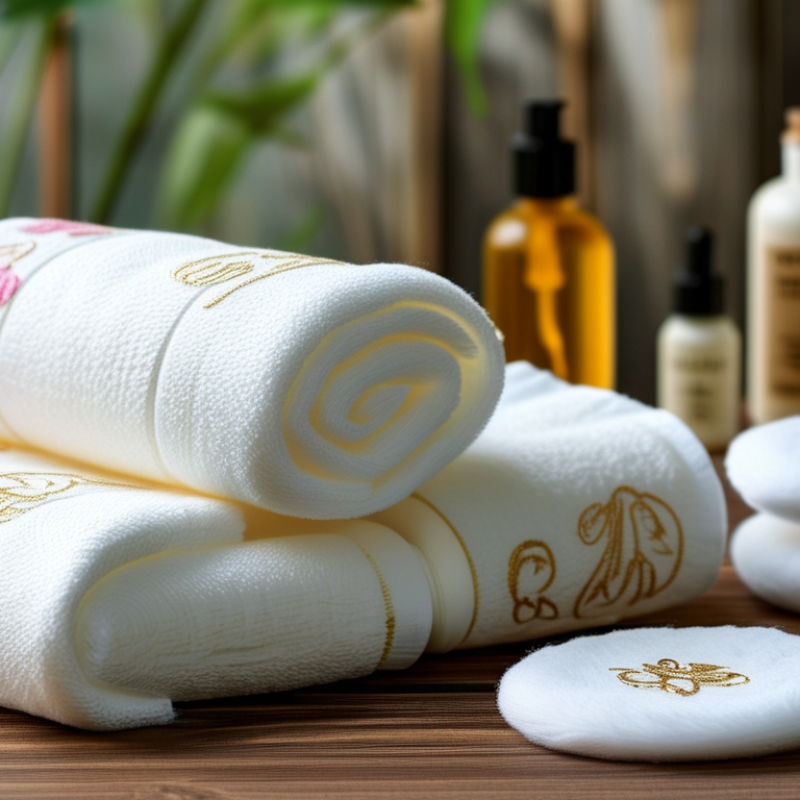
OEM beauty facial towels are towels made to a brand’s exact specifications. OEM means the manufacturer produces the item under the buyer’s design and requirements. These details may include fiber type, size, weight, color, edge stitching, packaging, and labeling. Common materials include cotton, bamboo blends, and soft microfiber. Each option feels different against wet or sensitive skin.
Brands use OEM towels to create a consistent customer experience. A facial towel can support cleansing routines, spa services, travel kits, or promotional sets. Custom dimensions also reduce wasted packaging space.
Reliable suppliers should provide fabric samples, production records, and quality checks. Look for tests covering absorbency, colorfastness, shrinkage, and loose threads. In my experience, softness alone proves little. A towel may feel luxurious initially but shed fibers after repeated washing. That detail can damage customer trust.
Tips: Request a sample before approving bulk production. Wash it several times at home or in a salon setting. Check odor, lint, drying speed, and edge strength. Ask how suppliers control materials and inspect finished goods. Keep written specifications for every order. Small differences matter. Also, reconsider excessive packaging; it can raise costs without improving the user’s experience. OEM production offers flexibility, but clear communication remains essential.
Choosing among the seven best OEM facial towel suppliers worldwide requires evidence, not polished catalogs. Request samples from the same production lot. Check GSM, softness, absorbency, lint release, shrinkage, and edge stitching after five washes. Samples expose weaknesses.
Use standardized testing wherever possible. ASTM D3776 can verify fabric weight, while ISO 6330 supports repeatable domestic washing procedures. Ask suppliers for colorfastness, fiber-content, and restricted-substance test reports from independent laboratories. Textile Exchange’s 2024 Materials Market Report estimated global fiber production at 124 million tonnes in 2023. This figure highlights why recycled content and traceable cotton deserve careful review, rather than vague “eco” claims.
Production control matters as much as fabric quality. Confirm the factory’s monthly capacity, minimum order quantity, lead time, packaging method, and rework policy. A capable supplier should explain how it controls lint near cutting and sewing areas. Ask for batch records and pre-shipment inspection photos. Do not rely only on certificates. Some documents may be outdated, incomplete, or unrelated to the actual factory.
A practical scorecard can rank quality, compliance, communication, price, and delivery reliability. Test a 30-by-30-centimeter towel against a wet-skin-use scenario. Measure absorption time and drying time. Small details matter. I would also request a pilot order before signing a large contract. This adds cost, but it may reveal uneven dyeing or excessive shrinkage early. Supplier evaluation is never perfectly objective; buyer assumptions can distort the score. Recheck them.
An anonymized supplier-comparison benchmark based on commonly published OEM textile requirements, purchasing thresholds, and quality-control practices. Verify current specifications directly with each supplier before placing an order.
| Rank | Supplier Profile | Typical Manufacturing Region | OEM Strength | Common Materials | Typical GSM | Typical MOQ | Sample Lead Time | Bulk Lead Time | Quality Evidence to Request | Evaluation Score |
|---|---|---|---|---|---|---|---|---|---|---|
| 1 | High-Capacity Terry OEM | East and Southeast Asia | Large-volume production, private labeling, woven labels, custom packing | 100% cotton, combed cotton, cotton-polyester blends | 350–650 | 1,000–3,000 pieces | 7–12 days | 25–45 days | Pre-production sample, GSM report, colorfastness test, dimensional-stability test, third-party inspection | 9.2/10 |
| 2 | Premium Hotel-Towel OEM | Türkiye and Southern Europe | Premium finishing, embroidery, jacquard borders, luxury packaging | Ring-spun cotton, combed cotton, organic cotton | 450–700 | 500–1,500 pieces | 10–15 days | 30–50 days | Fiber-content verification, absorbency test, pH test, azo-dye screening, stitching inspection | 9.0/10 |
| 3 | Sustainable Natural-Fiber OEM | South Asia | Organic-fiber sourcing, recycled packaging, ethical-production programs | Organic cotton, bamboo viscose, recycled cotton | 300–550 | 1,000–2,500 pieces | 10–18 days | 35–60 days | Valid organic-content certificate, transaction certificate where applicable, recycled-content evidence, wastewater records | 8.8/10 |
| 4 | Fast-Turnaround Private-Label OEM | China and Southeast Asia | Flexible customization, low-to-medium volume orders, rapid sampling | Cotton, microfiber, bamboo blends | 250–500 | 300–1,000 pieces | 5–10 days | 20–35 days | Golden sample approval, pre-shipment inspection, color-difference report, packaging drop test | 8.6/10 |
| 5 | Microfiber and Spa-Use OEM | East Asia | Quick-dry towels, laser-cut edges, printed designs, spa and salon packs | Polyester-polyamide microfiber, recycled polyester | 180–350 | 500–2,000 pieces | 7–14 days | 25–45 days | Absorbency and lint-shedding tests, edge-strength test, colorfastness test, fiber-composition report | 8.3/10 |
| 6 | European Small-Batch OEM | Eastern and Central Europe | Shorter regional logistics, small-batch production, premium finishing | Cotton, organic cotton, linen-cotton blends | 350–600 | 200–800 pieces | 10–20 days | 30–55 days | Factory audit, restricted-substance declaration, needle-control procedure, final inspection report | 8.1/10 |
| 7 | Cost-Efficient Promotional OEM | South and Southeast Asia | Entry-level pricing, promotional sets, basic logo printing and packaging | Cotton, polyester, cotton-polyester blends | 220–450 | 1,000–5,000 pieces | 8–15 days | 30–60 days | Material sample, logo-placement approval, random carton inspection, quantity and packing verification | 7.8/10 |
Supplier 1 focuses on custom facial towels for salons, hotels, spas, and skincare retailers. Its manufacturing process can adjust towel size, edge binding, fabric weight, absorbency, and embroidery. A practical sample might measure 30 by 30 centimeters, with a soft cotton surface and reinforced corners. These details reduce fraying after repeated washing.
Material selection deserves careful attention. The Textile Exchange Materials Market Report 2024 states that global fiber production reached 124 million tonnes in 2023. It may reach 160 million tonnes by 2030. Supplier 1 can respond with cotton, recycled polyester, or blended constructions. However, recycled content alone does not guarantee better performance. Testing still matters.
The supplier’s product strength lies in controlled customization. It can match towel thickness to drying speed, packaging space, and customer handling habits. Grand View Research forecasts steady growth in the global bath towel market through 2030, with a projected compound annual growth rate above 5 percent. That growth increases competition, but it also raises quality expectations. I would request colorfastness, absorbency, shrinkage, and lint-release test results before placing a large order. Small details matter.
One weakness may remain. Custom options can increase lead times and minimum order quantities. Buyers should confirm production schedules in writing. A beautiful sample is not enough.
Supplier 2: Private Label Options, Materials, and Production Capabilities
A dependable OEM supplier should offer more than a logo sewn onto a towel. For a Beauty Skincare Towel, private label options may include custom dimensions, woven labels, printed care tags, embroidery, and recyclable packaging. Ask for a physical pre-production sample. Digital images cannot show softness, lint, or edge quality.
Material selection affects performance and positioning. Combed cotton offers familiar softness and strong absorbency. Bamboo viscose feels smooth, but its environmental claims require careful verification. Lyocell can provide a refined surface, while microfiber dries quickly and suits travel sets. Textile Exchange’s 2024 Materials Market Report recorded global fiber production at 124 million tonnes in 2023, with cotton representing approximately 22%. That scale supports broad sourcing, but it does not guarantee consistent quality.
Production capability should include controlled weaving, dyeing, cutting, stitching, and inspection. Request test results for shrinkage, colorfastness, absorbency, lint release, and seam strength. A 350–500 GSM towel often balances softness and drying speed, though the best weight depends on use. The 2024 Global Wellness Economy Monitor valued the wellness economy at $6.3 trillion in 2023, increasing demand for polished personal-care accessories. Still, suppliers can overstate capacity. A sample may look excellent, then shrink after washing. I would require independent testing and a documented quality checklist before approving bulk production.
Moisture regain indicates how much moisture a fiber absorbs under standard textile testing conditions. Regenerated cellulose fibers such as viscose generally provide higher moisture regain, while polyester offers faster drying and lower moisture retention. These material characteristics can guide OEM facial towel selection, finishing, and production specifications.
Typical standard moisture regain values: cotton 8.5%, viscose 13.0%, nylon 4.5%, and polyester 0.4%. Reference: ASTM D1909 textile fiber moisture regain values.
The global beauty market could reach $580 billion by 2027, growing about 6% annually, according to McKinsey’s Beauty Market in 2023 report. That growth increases pressure on suppliers to reduce textile waste. A responsible OEM partner should offer traceable cotton, low-impact dyes, and practical packaging options.
Textile Exchange reported 342,265 metric tonnes of organic cotton production in its 2023 Organic Cotton Market Report. However, organic material alone does not prove sustainability.
For a Beauty Cleansing Towel, product design matters. A 300–400 GSM terry structure can balance softness, absorbency, and drying speed. Reinforced edges help prevent fraying after repeated washing.
Suppliers should provide fiber certificates, dye safety documents, and batch-level testing. GOTS certification can support organic textile claims, while OEKO-TEX testing helps verify harmful-substance controls.
These checks make purchasing decisions more reliable.
Use less packaging.
A careful supplier can also develop recycled polyester blends, but these may shed microfibers during washing. That weakness deserves honest discussion. Cotton towels can require more water during cultivation, while recycled fibers may improve durability. The better choice depends on the product’s expected lifespan, washing instructions, and target market. Pilot orders, wash tests, and absorbency measurements should come before large production. Sustainable claims need evidence, not attractive wording.
A dependable OEM facial towel supplier must control quality before the cartons leave the factory. For a Beauty Cotton Soft Towel, buyers should check GSM, dimensions, stitching, absorbency, lint, and colorfastness. AATCC TM79 provides a recognized absorbency testing method, while ISO 105-C06 supports colorfastness evaluation after washing.
Independent inspection matters. Textile Exchange’s Materials Market Report 2024 estimated global fiber production at about 124 million tonnes in 2023. Such scale increases pressure on traceability, material consistency, and responsible sourcing. Suppliers should retain batch records, fabric inspection reports, and pre-shipment samples. A 4-point fabric inspection system can identify weaving defects before cutting begins. Small checks prevent expensive rework. Still, one approved sample cannot prove every batch will perform equally.
Packaging also affects customer experience. Each towel should be folded consistently, protected from moisture, and packed in cartons suited to long-distance handling. Carton dimensions, gross weight, inner counts, and shipping marks must match export documents. Suppliers familiar with ISTA-style transport testing can reduce crushing and water-damage risks. Reliable export teams coordinate commercial invoices, packing lists, certificates of origin, and booking schedules. However, vague delivery promises remain a warning sign. Ask for photographs, inspection records, and loading evidence. Quality control is not perfect; even experienced factories can miss a loose thread or uneven hem. The supplier’s response to that mistake reveals more than a polished catalog.
Choosing an OEM facial towel supplier requires more than comparing quoted prices. The seven suppliers in this review were assessed through sampling, factory communication, and production details. Each supplier serves a different brand need. Some focus on soft cotton towels, while others develop compact Beauty Cleansing Wipes for travel and retail kits. Material consistency matters. A towel may feel smooth during sampling but become rough after repeated washing.
The first supplier offers strong cotton customization and accurate embroidery. The second provides fast prototype development for seasonal collections. The third has better experience with individually packed facial towels. The fourth supports recycled fibers, though its color range is narrower.
The fifth handles large orders efficiently and maintains stable carton measurements. The sixth offers flexible minimum order quantities for smaller brands. The seventh specializes in delicate, fragrance-free cleansing formats with careful moisture control. None is perfect.
Brand owners should request fabric weight, absorbency results, shrinkage data, and packaging samples. Ask how rejected pieces are recorded. A reliable supplier should explain inspection points clearly, not simply promise quality. During evaluation, check loose threads, edge stitching, odor, and label placement under bright light. One overlooked issue remains delivery planning. A supplier may meet production targets but still delay export documents or packaging approval. That risk deserves attention. My comparison also found that communication speed can hide weak technical knowledge. Fast replies are useful, but precise answers matter more. A written sample report can reveal more than a polished sales presentation.
They are facial towels made to a buyer’s exact specifications. Requirements may include fiber, size, weight, color, stitching, packaging, and labels. The towel is customized.
Customized towels create a consistent experience across salons, spas, hotels, and skincare kits. They can fit travel cases or smaller packaging. Small dimensions reduce wasted space.
Common choices include cotton, bamboo blends, recycled polyester, and soft microfiber. Each material feels different on wet or sensitive skin. Material choice affects absorbency, drying speed, and durability.
A practical sample may measure 30 by 30 centimeters. A 300–400 GSM terry structure can balance softness and absorbency. The best weight depends on drying space and washing habits.
Request tests for absorbency, colorfastness, shrinkage, lint release, odor, and loose threads. Check edge strength after repeated washing. Softness alone proves little.
Wash the sample several times at home or in a salon. Check shedding, drying speed, smell, and corner strength. Samples reveal weaknesses.
Not necessarily. Organic cotton still requires farming resources, while recycled fibers may shed microfibers. Compare lifespan, washing instructions, and expected use. Sustainability claims need evidence.
Yes. More options can increase minimum order quantities and lead times. A beautiful sample may not represent bulk production. Confirm schedules and specifications in writing.
Use packaging that protects the towel without adding unnecessary layers. Excessive packaging raises costs and creates more waste. Less packaging may be better.
Confirm materials, dimensions, GSM, colors, stitching, testing, packaging, and inspection procedures. Request production records and batch information. I would begin with a pilot order.
This guide explores what OEM Beauty Facial Towel products are and why beauty brands choose customized towels for skincare routines, salons, spas, and retail programs. It explains how OEM manufacturing can support tailored sizes, fabrics, colors, labels, packaging, and order requirements while helping brands create a consistent customer experience. The article also outlines the key factors for evaluating suppliers worldwide, including material quality, absorbency, softness, production capacity, customization flexibility, communication, quality control, and export support.
It introduces seven supplier categories and compares their strengths, such as custom manufacturing, private label services, material selection, sustainable solutions, careful inspection, professional packaging, and international delivery capabilities. By reviewing these factors side by side, readers can better assess which supplier matches their product positioning, target market, budget, sustainability goals, and expected order volume. The comparison is designed to help beauty businesses make a practical and informed decision when sourcing reliable OEM facial towels.