Picking out the best OEM hanging medical paper towel supplier for 2026 isn’t just about comparing prices per unit. Hospitals, clinics, labs, and care homes all need towels that perform reliably, especially at those busy handwashing stations where seconds really count. An OEM hanging paper towel should fit the dispenser just right, pull apart easily, and soak up water without tearing apart too fast. Sometimes it’s the little things that make a big difference—like a loose roll that runs out quickly and wastes everyone’s time.
This guide is here to help you look beyond the surface—consider the supplier’s experience, how well they control their production process, their ability to customize, and whether they follow transparent quality practices. Trustworthy manufacturers should be willing to share details on the paper’s grade, ply structure, how long the roll is, perforation accuracy, and their packaging methods. It’s also smart to ask for samples before placing a big order—testing how they hold up when wet, whether they shed lint, if they fit in your dispensers, and whether the cartons can survive transport without damage. And don’t forget to request batch traceability info and current quality certificates—you don’t want vague promises, after all.
Of course, the cheapest option isn’t always the best. That might seem obvious, but it’s easy for purchasing teams to overlook this and focus only on price. A good OEM partner should be flexible—able to tweak embossing, core sizes, label designs, packaging artwork, and delivery schedules to match your needs. The same goes for comparing hanging medical hand wipes with traditional folded towels—each has its place, depending on your workflow.
Building trust isn’t just about a quick check; it’s about ongoing relationships, so supplier audits, customer feedback, and clear, open communication are key. Still, no one’s perfect, and even samples can sometimes perform differently from bulk batches, so regular inspections are a must. This overview is meant to give you a few key questions to ask before you lock in a manufacturing partner long-term. The main goal? Consistent hygiene support, smart customization options, and a reliable supply—especially in busy, demanding medical environments that can’t afford to fall short.
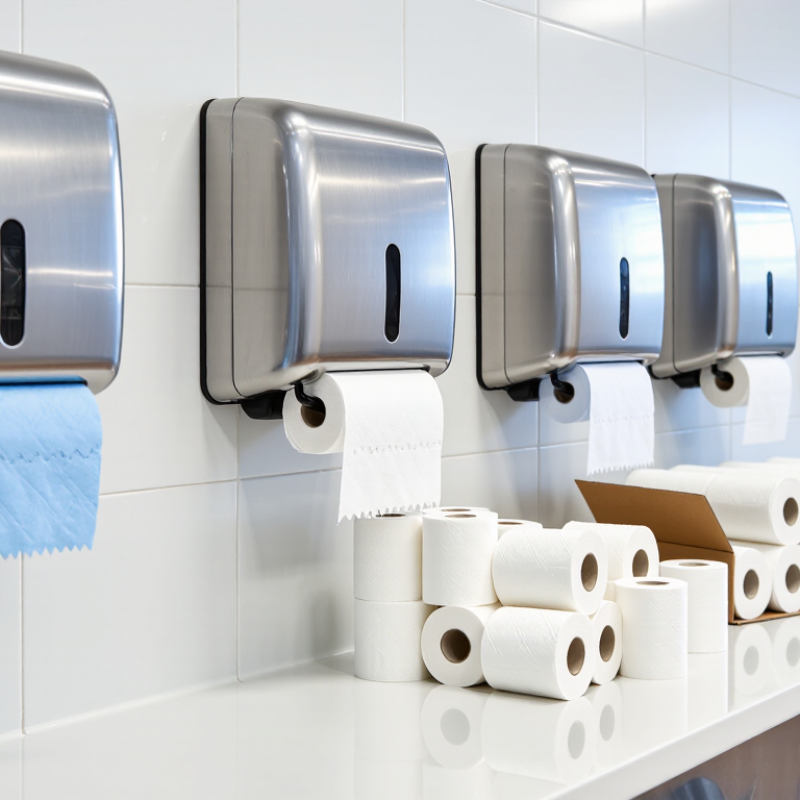
What Is an OEM Hanging Medical Paper Towel Supplier?
An OEM hanging medical paper towel supplier manufactures towels and dispensers to a buyer’s technical requirements.
OEM means more than adding a logo. It includes fiber selection, sheet size, perforation, absorbency, packaging, and dispenser compatibility.
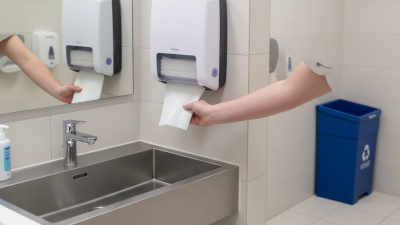
In a clinic, a towel should release cleanly from a wall-mounted unit. It should not tear into small fragments or touch the next sheet.
Procurement teams usually provide drawings, carton dimensions, and performance targets. Experienced suppliers then prepare samples, pilot batches, and inspection records.
ISO 13485-based quality controls can strengthen traceability, even when the product is not classified as a medical device. Material safety data, pulp origin, moisture resistance, and microbiological test methods deserve review.
Small details matter. Sometimes, they are missed.
The WHO Global Report on Infection Prevention and Control (2022) estimates that healthcare-associated infections affect about
7 of every 100 hospitalized patients in high-income countries.
The estimate rises to
15 of 100 in low- and middle-income countries.
Paper towels cannot solve infection risks alone, but reliable hand-drying supports broader hygiene procedures. An OEM supplier should therefore document absorbency, lint performance, batch consistency, and sealed transport conditions.
Buyers should also check whether the towel fits their existing dispenser without forced pulling. A cheaper roll may create more waste. That is an uncomfortable but practical calculation.
How Hanging Medical Paper Towels Are Designed for Healthcare Use
Hanging medical paper towels are designed around more than simple hand drying. In healthcare areas, every detail can affect hygiene, workflow, and user confidence. The towel usually hangs in a controlled dispenser, reducing contact with unused sheets. Staff can pull one portion without touching the remaining supply. That small action matters near sinks, treatment rooms, and patient bathrooms.
A practical design uses consistent folds, clean perforations, and reliable sheet strength. The paper should absorb water quickly without breaking apart during use. Low-lint materials help protect clean surfaces and reduce loose fibers around instruments. Some facilities prefer softer sheets, while others prioritize high absorbency and lower consumption. The right balance depends on patient flow, cleaning routines, and dispenser placement.
OEM development should include testing under realistic conditions. Teams can check wet strength, dispensing performance, packaging integrity, and storage stability. Paper towels may face humidity, frequent handling, and uneven pulling force. No design is perfect. A towel that works well in a quiet clinic may perform differently in an emergency department. This is where supplier communication becomes important. Specifications should be clear, but feedback from nurses, cleaners, and facility managers can reveal overlooked problems. A slightly different fold or sheet length may improve daily use more than a decorative package. Reliable production also requires batch checks and traceable quality records. I would not judge a medical towel by softness alone. Its real value appears during repeated, ordinary tasks.
Which Materials and Specifications Meet Medical Facility Needs?
Choosing an OEM hanging medical paper towel supplier requires more than comparing prices. Material selection directly affects hand hygiene, user comfort, and dispenser performance.
Virgin cellulose often provides clean texture, reliable absorbency, and lower lint release. Recycled fiber may reduce environmental impact, but its quality must be verified carefully. In clinical areas, choose towels with consistent thickness, strong wet performance, and controlled dust levels. Paper should not tear during normal drying. That sounds obvious. Yet weak sheets still appear in busy facilities.
Specifications should match the dispenser and the room. Check roll width, sheet length, core diameter, perforation quality, and hanging configuration. A towel that fits poorly may cause jams and unnecessary waste. Packaging also matters. Sealed inner wrapping helps protect products during storage and transport. Lot identification supports traceability and routine quality checks. Suppliers should provide material details, test reports, production samples, and clear tolerance ranges. Certifications can support evaluation, but they should not replace practical testing.
Healthcare buyers should test towels beside sinks, gloves, and commonly used dispensers. Measure absorbency, dispensing speed, lint, and tearing after wetting. Do not assume a softer towel performs better. It may leave more residue or require extra sheets. A dependable OEM partner should explain manufacturing controls and respond clearly to specification changes. I would also review complaints, delivery consistency, and sample-to-batch variation. No specification is perfect. Actual facility use may reveal problems that laboratory results miss.
How the OEM Customization and Sampling Process Works
Choosing a reliable OEM hanging medical paper towel supplier requires more than comparing prices. The real work begins with clear product specifications. Define sheet size, ply, material, absorbency, packaging, dispenser compatibility, and monthly volume. For Wall-Hanging Medical Hand Wipes, also confirm whether the material is dry or pre-moistened. Small wording differences can change production requirements.
A practical OEM process starts with a technical discussion and a written specification sheet. The supplier should provide material details, production tolerances, packaging drawings, and quality-control procedures. Ask for batch traceability and test records covering softness, tensile strength, lint, and microbial control when applicable. Samples expose reality. A sheet may feel strong in a catalog, but tear beside a busy sink.
During sampling, request several versions instead of approving the first one. Compare thickness, folding accuracy, moisture behavior, opening force, and dispenser fit. Our first sample once had clean packaging but folded unevenly inside the pouch. That miss taught us to inspect the internal structure, not only the appearance. After feedback, the supplier should revise the sample and record each change. Before mass production, approve a signed sample, artwork proof, packing method, and inspection standard. A pre-shipment inspection can still reveal weak seals or incorrect carton counts. That step feels slow, but replacing a full shipment is slower.
2026 OEM Hanging Medical Paper Towel Customization & Sampling Timeline
Typical working-day planning benchmark for developing a customized medical paper towel product from brief to sample approval.
The largest time requirement usually occurs during material selection, structure development, and sample production.
Clear artwork, technical specifications, packaging requirements, and prompt feedback can help reduce the overall OEM development cycle.
What Quality and Safety Standards Should Suppliers Follow?
In 2026, an OEM medical paper towel supplier should treat quality as a daily control, not a printed certificate. The WHO/UNICEF Joint Monitoring Programme reported that only 57% of healthcare facilities had basic hygiene services in 2022. That gap makes dependable hand-drying materials essential. Suppliers should document fiber sources, production batches, chemical use, and contamination controls. Each shipment needs traceable lot numbers.
Testing should follow relevant tissue standards, including ISO 12625 methods for grammage, tensile strength, and water absorption. A supplier should also test lint release, wet strength, softness, and dispenser fit. Z-Fold Hanging Medical Hand Towels must open smoothly without tearing beside a crowded clinical sink. Packaging should resist moisture and include clear production and storage information. Small details matter.
Safety claims require restraint. Paper towels should not be called sterile unless a validated sterilization process supports that claim. If the product is treated as a medical device in a specific market, the supplier may need a quality system aligned with ISO 13485. Otherwise, ISO 9001, hygiene controls, and documented risk assessment remain practical foundations. CDC hand-hygiene guidance supports using single-use towels where available. Still, an audit can miss real-world failures. A roll may meet laboratory absorption targets but jam inside the dispenser. Pilot testing in operating areas is necessary. That step is often underestimated.
How to Evaluate Supplier Capacity, Pricing, and Delivery
Choosing the 2026 best OEM hanging medical paper towel supplier requires more than comparing quotations. Ask for production records, monthly capacity, and recent quality data. A reliable supplier should explain how many N-Fold Hanging Medical Hand Towels can be produced weekly. Request evidence from similar orders, not only a polished presentation.
Pricing needs careful inspection. Compare paper weight, sheet dimensions, folding accuracy, packaging, and sampling costs. A low unit price may hide expensive tooling, inspection fees, or unstable material costs. Ask whether the quoted price remains valid during the purchasing period. I have seen buyers focus on cents per pack, then lose money through excess carton space and damaged inner packaging. That mistake is easy to repeat.
Delivery performance depends on planning and communication. Confirm raw material availability, production lead time, inspection timing, and loading schedules in writing. Ask how the supplier handles rejected samples or delayed components. A practical test order can reveal more than a long capability statement. Track actual output, response speed, carton condition, and document accuracy. Do not trust promises alone. Still, delivery estimates can change suddenly when demand rises. Build a small time buffer and review the plan before each repeat order.
2026 Best OEM Hanging Medical Paper Towel Supplier? – How to Evaluate Supplier Capacity, Pricing, and Delivery
Anonymized supplier-screening matrix for OEM hanging medical paper towels and compatible dispenser formats
| Supplier Profile |
Monthly Output Capacity
(Cartons) |
Standard MOQ
(Cartons) |
Indicative OEM Price
(USD/Carton) |
Sample Lead Time
(Days) |
Mass-Production Lead Time
(Days) |
On-Time Delivery
Target |
Private-Label
Capability |
Quality-System
Documentation |
Recommended Evaluation
Score / 100 |
| Profile A |
80,000–120,000 |
500 |
$18.50–$22.00 |
7–10 |
25–35 |
≥95% |
Printed cartons, labels, pack counts |
ISO 9001; batch traceability |
92 |
| Profile B |
40,000–70,000 |
300 |
$20.00–$25.50 |
5–8 |
20–30 |
≥96% |
Labels and customized outer packaging |
ISO 9001; inspection records |
89 |
| Profile C |
150,000–220,000 |
1,000 |
$16.80–$20.40 |
10–14 |
35–45 |
≥93% |
Full packaging customization; color printing |
ISO 9001; supplier audit reports |
88 |
| Profile D |
25,000–45,000 |
200 |
$23.00–$29.00 |
4–7 |
18–28 |
≥97% |
Low-volume OEM; artwork support |
ISO 9001; incoming-material controls |
87 |
| Profile E |
100,000–160,000 |
800 |
$17.90–$22.80 |
8–12 |
28–40 |
≥94% |
Custom dimensions, folding, cartons and labels |
ISO 9001; moisture and basis-weight records |
86 |
| Profile F |
15,000–30,000 |
100 |
$26.00–$34.00 |
3–6 |
15–25 |
≥96% |
Small-batch OEM; digital label printing |
Documented QC procedures; limited audit history |
81 |
What Questions Should Buyers Ask Before Placing an OEM Order?
2026 Best OEM Hanging Medical Paper Towel Supplier?
Before placing an OEM order, buyers should ask how the supplier controls quality from pulp selection to final packing. Request material details, absorbency results, wet strength data, and production records. For V-Fold Hanging Medical Hand Towels, confirm the fold size, hanging hole design, sheet count, and dispenser compatibility. A towel may look suitable but fail when pulled with wet gloves.
Ask whether the supplier provides pre-production samples and supports independent testing. Clarify acceptable color variation, odor limits, dust control, and packaging protection during shipping. Each carton should show clear batch information for easier traceability. Buyers should also check factory experience, quality inspections, corrective-action procedures, and realistic lead times. Low prices can hide thinner sheets, unstable supply, or weak packaging.
Tips: Test samples in the actual clinical dispenser. Measure tearing force and absorbency. Ask for inspection photos before shipment. Confirm how rejected goods are handled. Do not rely on a polished sample alone. I have seen good samples become inconsistent during mass production. That risk deserves a written control plan. Also ask how the supplier manages sudden demand changes, because an urgent order can expose weak production planning.
FAQS
Request weekly output records, monthly capacity, and evidence from similar orders. Ask how many cartons can be produced during busy periods. Numbers alone are not enough. A small trial order can reveal real capacity.
Compare sheet weight, dimensions, fold accuracy, packing materials, and sample costs. Check whether inspection or tooling fees are excluded. A low unit price may increase total costs through larger cartons or damaged packaging. That easy mistake happens.
Ask for written dates covering materials, production, inspection, and loading. Confirm the expected lead time before placing the order. Keep a small time buffer. Demand can rise suddenly, and estimates may change.
Request material information, absorbency results, wet strength data, and recent production records. Confirm sheet count, fold size, hanging-hole design, and dispenser fit. A towel may look fine but tear with wet gloves.
Samples help buyers test absorbency, tearing force, dimensions, and dispenser performance. Use the actual dispenser whenever possible. Test it properly. A polished sample may not match mass production.
Ask for inspection stages from material selection through final packing. Require clear acceptance limits for color, odor, dust, and folding accuracy. Request inspection photos before shipment. Written controls are safer than friendly promises.
Each carton should show batch details, sheet quantity, production information, and handling instructions. Check inner packaging for crushing, moisture, and loose sealing. Carton condition matters. It affects storage and delivery losses.
Agree on corrective actions, replacement rules, and response times before production begins. Ask who approves rejected samples and how records are maintained. Review the plan before every repeat order. I would not assume the first plan remains perfect.
Conclusion
Choosing the right OEM Hanging Medical Paper Hand Towel supplier requires more than comparing unit prices. A reliable supplier should understand healthcare environments and offer hygienic, absorbent, low-lint paper towels in suitable sizes, folds, ply options, packaging formats, and dispensing designs. Materials should be selected according to facility needs, including softness, strength, moisture absorption, and compatibility with wall-mounted or hanging dispensers. Suppliers should also provide clear product specifications, samples, and customization support for packaging, dimensions, printing, and order quantities.
Before placing an OEM order, buyers should review the supplier’s production capacity, quality-control procedures, testing records, lead times, minimum order quantities, pricing structure, and delivery reliability. The sampling process should confirm appearance, performance, packaging, and consistency before mass production begins. Buyers should also ask how the supplier manages raw-material sourcing, batch inspection, documentation, and complaint handling. A strong supplier communicates clearly, maintains stable quality, supports practical customization, and delivers products that meet the daily hygiene and operational requirements of medical facilities.